

News

Are MDA criteria created equal in PsA?
Minimal Disease Activity criteria are used to evaluate PsA disease activity and response to treatment. Given that a patient only has to meet 5 of the 7 criteria, should the individual components be weighted equally?
ACR Best Abstracts - Day 1
The RheumNow faculty reporters have been scouring the meeting and online presentations to find the best abstracts from ACR22. Here are some of their choice abstracts reported today on day 1 of ACR 2022 (#ACRbest).

Are we really treating Psoriatic disease if we only address active disease domains and T2T?
It’s widely accepted that Psoriatic disease has multi-system, multi-domain potential that can lead to life altering complications if left untreated or undertreated. Rheumatologists have shifted the way we discuss treatment options and disease state expectations with patients. Two #ACR22 abstracts stood out to me regarding the Psoriatic disease patient experience and will, ultimately, add to what I do in clinic.
Updates on Reproductive Health in Women with SLE
Is patient-administered cervical cancer screening an option for women with SLE? Should I prescribe estrogen containing contraceptives to SLE women with APL antibodies? What complications should I be aware of in pregnant women with SLE? Here are three abstracts that provide insight.
Infections in pre-RA: a cause or a consequence?
Rheumatoid arthritis is known to be associated with a higher risk of infections. In abstract 0535, Porter and colleagues have assessed infection rates in the pre-RA and early RA phases as defined by antibiotics prescription and hospital admissions with an infection main diagnostic code in the UK National database.
Repetitive Testing of Anti-dsDNA Antibodies May Predict Flares in SLE
In abstract #0327 presented during the poster session on Saturday, Dr. Ai Li Yeo and colleagues investigated the usefulness of serial anti-dsDNA testing in predicting flares among SLE patients who have persistently positive anti-dsDNA titers.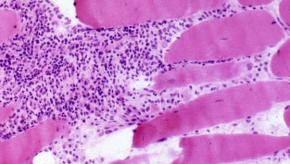
Proposed Cancer Screening for Inflammatory Myositis Patients
Today's plenary session features a novel proposal on how and which patients with Idiopathic Inflammatory Myopathy (IIM) should be screened for cancer. Abstract 0002 by Oldroyd et al, entitled "Cancer Screening Recommendations for Patients with Idiopathic Inflammatory Myopathy" took on this thorny practice issue.
Don’t be ‘ticked’: TYK2 is not a JAK!
Recently the FDA approved deucravacitinib, a highly selective TYK2 inhibitor for psoriasis. Trials are positive in psoriatic arthritis and a phase II study in SLE. What about the effects? Presentations from the ACR22 meeting may provide answers.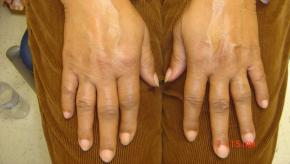
Survival and Mortality in RA: time to move away from “one-size fits all”?
Patients with RA are known to have a higher mortality risk than the general population.

Exciting Data for SLE: Plenaries from #ACR22
ACR Convergence 2022 promises to be another exciting year for research in systemic lupus erythematosus (SLE), with multiple plenary sessions devoted to therapeutic advancements. Here’s a quick rundown of what to expect!